
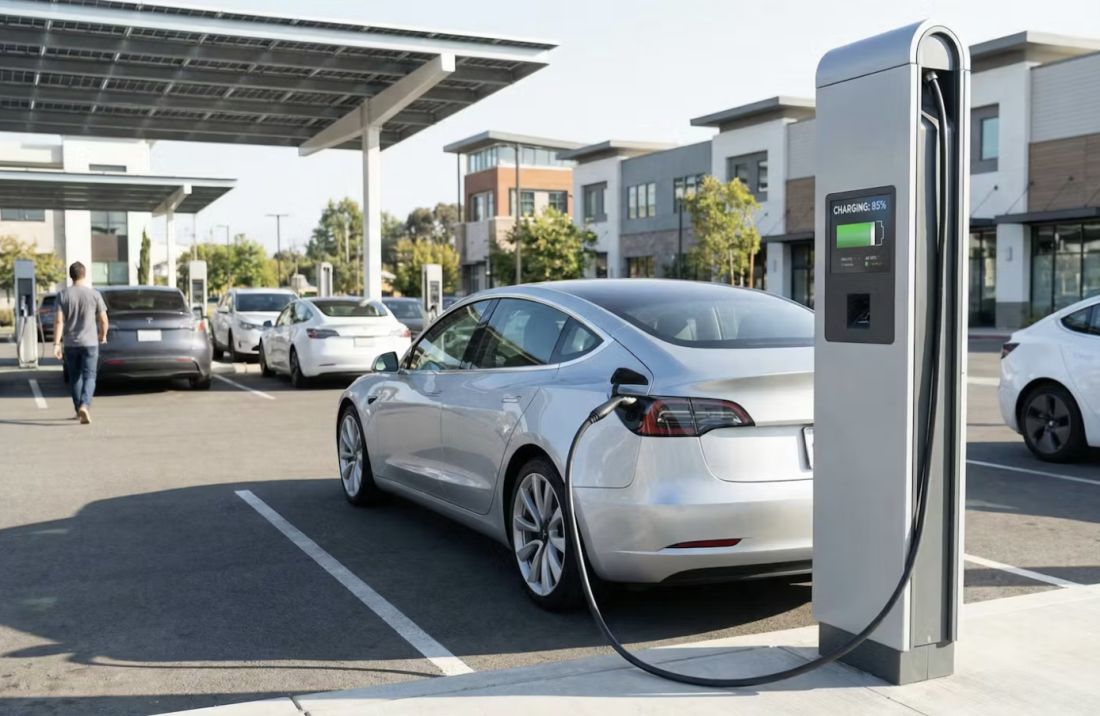
How Long Does It Take to Charge an Electric Car?
Charging time is one of the biggest differences between owning an electric car and a petrol car — and it’s also one of the easiest things to understand once you know the basics. If you’re considering an EV, you can view our current electric car stock here: Electric cars in stock.
The short version: it depends on the charger speed, the car, and how full the battery already is.
The quick answer (the rule of thumb most drivers use)
EV charging is usually talked about as 0–80%, not 0–100%.
That’s because most cars charge quickly up to around 80%, then slow down to protect the battery and manage heat. So when you see “fast charging” claims, they’re often describing a quick top-up to 80%.
Typical EV charging times by charger type
1) 3-pin plug (UK home socket) — slowest
Best for: overnight top-ups, very low mileage drivers, occasional charging
Typical time:8–24+ hours (varies hugely by battery size)
This is the “emergency” style option. It works, but it’s slow.
2) Home wallbox (most common) — 7kW
Best for: most EV owners with a driveway
Typical time:4–10 hours (often “overnight”)
For many people, this is the sweet spot: plug in at home and wake up to a charged car.
3) Public destination chargers — 7kW to 22kW
Best for: when you’re parked for a while anyway. Handy for topping up during the day.
Typical time:2–8 hours
Most likely found at shopping centres, car parks, gyms and workplaces.
4) Rapid chargers — 50kW
Best for: motorway services, quick top-ups
Typical time:30–90 minutes to ~80% (depending on car/battery)
A lot of EVs can use 50kW chargers well, but the car’s maximum charging speed matters.
5) Ultra-rapid chargers — 100kW to 350kW
Best for: fastest stops on longer journeys
Typical time:15–45 minutes to ~80% (for cars that can accept high speeds)
Important: not every EV can take 150kW+ — if the car’s max is 50kW, it’ll still charge at 50kW even on a 350kW charger.
A simple example (to make it real)
For a typical EV with a 50–60kWh battery, you might expect roughly:
7kW home wallbox: around 7–9 hours
50kW rapid: around 40–70 minutes to ~80%
150kW+ ultra-rapid (if supported): around 20–35 minutes to ~80%
These are ballpark figures, but they’re a useful guide.
What affects charging time most?
Battery size
Bigger battery = more time to fill.
Charger power (kW)
Higher kW = faster charging if the car can accept it.
The car’s max charging rate
Your EV may cap at 50kW, 100kW, 150kW, etc.
Battery level when you plug in
Charging from 10% to 80% is much quicker than 80% to 100%.
Temperature and battery conditioning
Cold weather can slow charging. Some EVs pre-condition the battery on the way to a rapid charger to improve speeds.
Charging curve (why it slows down after 80%)
The car reduces power as the battery fills to protect long-term battery health and manage heat.
How EV drivers think about charging day-to-day
In reality, most EV owners don’t regularly charge from empty to full. It’s usually:
overnight charging at home (if available), and
short rapid top-ups on longer journeys.
Final thought
Charging an electric car can take anywhere from 15 minutes to overnight, depending on the charger and the car — but for most people it’s less about waiting around and more about building charging into a routine.
If you’d like to explore EV options, you can view our current electric stock here. And if you’d like to speak to the team in person, feel free to contact us.
Frequently Asked Questions
1) Why do most people talk about charging from 0–80% rather than 0–100%?
Because EVs usually charge fastest up to around 80%, then slow down to protect the battery and manage heat.
2) What’s the quickest way to charge an EV on the go?
A rapid or ultra-rapid charger is fastest, but your car will only charge as quickly as its maximum charging rate allows.
3) How long does home charging usually take?
With a typical 7kW home wallbox, many EVs can charge overnight — often roughly 4–10 hours, depending on battery size and starting percentage.
4) Does cold weather affect charging times?
Yes — cold batteries can charge more slowly, and some EVs will warm the battery before rapid charging to improve speeds.
5) What makes the biggest difference to charging time?
Mainly the charger power (kW), the car’s max charging speed, the battery size (kWh) and how full the battery is when you plug in.